
English| EUR
Suggested for you
More currencies
Choose a language
The Island of the Dolls occupies a remote chinampa in Xochimilco's southern canal network, roughly two hours by boat from the main embarcaderos. The island sits at Laguna del Teshuilo, accessible only by trajinera through a maze of narrow waterways that require an experienced boatman to navigate.
Quick answer
The Island of the Dolls is located at Laguna del Teshuilo in Xochimilco, approximately 28 kilometers south of central Mexico City. The island has no road access and sits deep within the canal system, reachable only by hired trajinera boat from one of Xochimilco's main embarcaderos. The journey requires navigating a network of canals for 1.5 to 2 hours each way, depending on water conditions and your departure point.
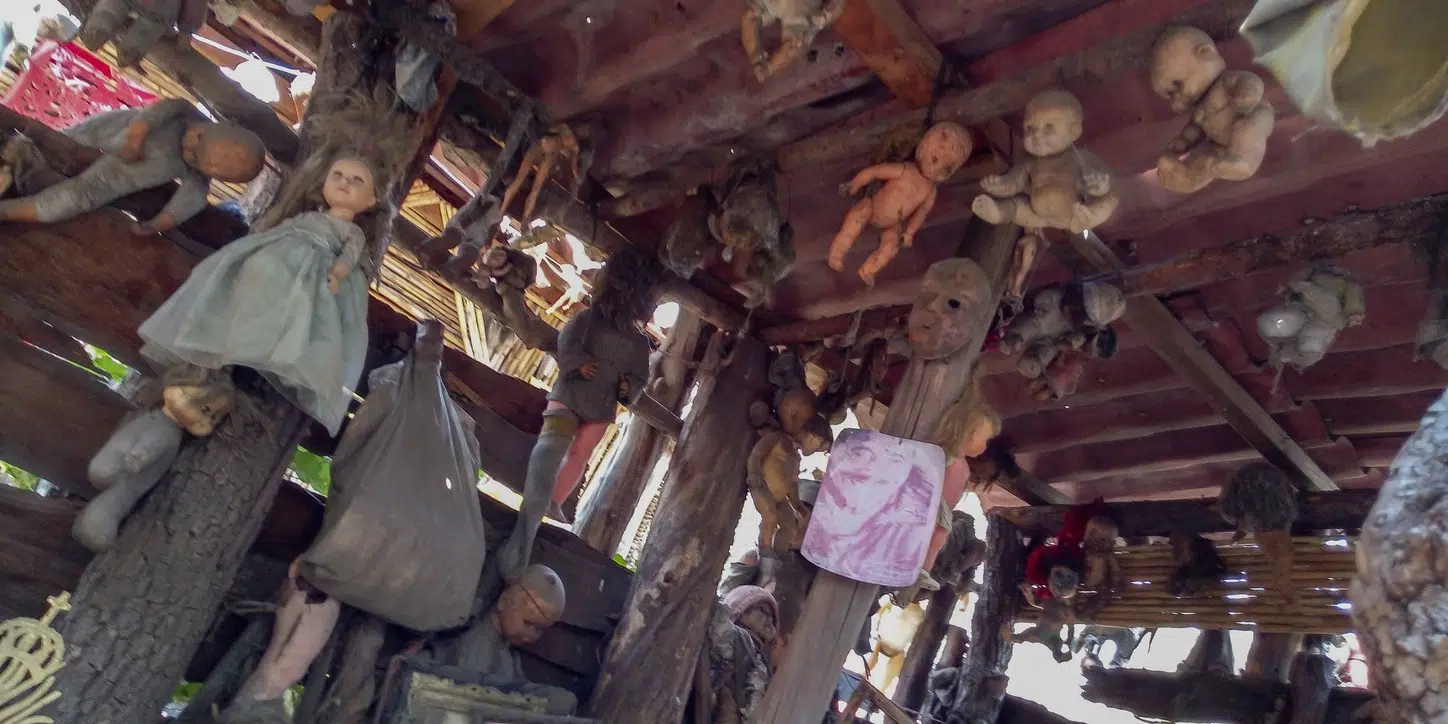
More than a thousand dismembered dolls hang from trees on a six-acre chinampa that most visitors never find. The island of the dolls where is it becomes a navigation puzzle the moment you arrive in Xochimilco, because street addresses mean nothing in a landscape of floating gardens and intersecting canals. The site sits at coordinates that place it in the borough's southern extreme, but GPS pins are useless without a boat and a boatman who knows which channels dead-end and which connect to Laguna del Teshuilo. The embarcaderos near the Xochimilco light rail station offer the shortest routes, though "shortest" still means an hour and a half of steady poling through canals that narrow to single-boat width. Most boatmen quote a four-hour round trip, which includes the return journey and a brief walk around the chinampa itself. The trajineras are flat-bottomed punts, brightly painted but engineered for the shallow draft required in channels that silt up between rainy seasons. During dry months, low water levels force longer detours through alternate routes, adding 30 minutes or more to the trip. Understanding the island of the dolls where is it guide means accepting that this is not a place you stumble upon. The caretaker family maintains the island and collects a 50-peso conservation fee per visitor, paid on arrival. The dolls themselves—plastic heads wedged into tree forks, limbless torsos wired to branches—were collected by Don Julián Santana Barrera over five decades, starting in the 1950s after he claimed to have found a drowned girl in the canal. The collection grew into an obsession, and the chinampa became a shrine that now draws visitors willing to endure the long boat ride. The canal system itself is a UNESCO World Heritage Site, a remnant of the Aztec-era chinampas that once fed Tenochtitlan. The island sits within this protected zone, which means development is restricted and motorized boats are prohibited in most channels. The silence during the journey is broken only by the boatman's pole striking the canal bottom and the occasional mariachi group drifting past on tourist-filled trajineras. Visiting la isla de las muñecas requires planning around the boat schedule, the weather, and the physical reality of spending hours on open water with no shelter from the sun.
“The island sits deep within the canal system, reachable only by hired trajinera boat from one of Xochimilco's main embarcaderos.”
The Island of the Dolls is located deep within the remote southern reaches of the Xochimilco canal system at Laguna del Teshuilo, 16038 Ciudad de México, CDMX, Mexico. Access is exclusively by water, requiring a specialized long boat journey known as a trajinera from one of the authorized piers.
Line 2 (Blue Line) to Tasqueña Station
Tren Ligero from Tasqueña to Xochimilco Station
Direct from Mexico City center to Embarcadero Cuemanco or Embarcadero Fernando Celada
Trajinera journey from pier to island
Plan your arrival for the window between 07:00 and 10:00 to ensure calm water and avoid congestion. Choose your embarkation pier carefully, as the transit to the island by trajinera takes significantly longer than standard tourist circuits.
The best arrival window is 07:00–10:00 to avoid crowds and ensure calm water for the long boat journey through the canals. Planning your visit during this period provides the most stable conditions for navigating the Xochimilco waterways.
—
Canal traffic is light and waters remain calm. This is the optimal time for a quiet experience.
Warm, 20°C–28°C
Dry season offers consistent sunshine for photography. Water levels are stable during these months.
Humid, 18°C–25°C
Rainy season brings afternoon showers. Morning travel is essential to avoid weather disruptions.
Verdict: The best slot for a visit is Tuesday to Thursday, arriving between 07:00–10:00, during the dry months of February to May.
The Island of the Dolls in Xochimilco is accessible to visitors daily throughout the week.
The island of the dolls where is it located takes its name from the tragic vision of Julian Santana Barrera, a fisherman who arrived in Xochimilco's canals during the 1950s. Barrera claimed he discovered the body of a young girl who had drowned near the island in 1951. Shortly after, he found a doll floating in the same water. Believing the girl's spirit haunted the chinampa, he hung the doll from a tree as an offering. For the next fifty years, Barrera collected thousands of dolls from the canals and nearby trash heaps. He suspended them from branches, nailed them to tree trunks, and arranged them in makeshift shrines across the island. Neighbors in the canal network reported that Barrera spoke to the dolls and claimed they protected him from malevolent forces. By 2001, the island had become a dense forest of decaying plastic limbs and weathered faces. Barrera drowned in 2001 in the same canal where he said he found the girl's body five decades earlier. His nephew Anastasio Santana took over as caretaker and opened the site to visitors. Today, tourists navigating the trajinera routes through the ecological zone of Xochimilco encounter over two thousand dolls in various states of deterioration. Vines grow through hollow eye sockets, paint peels from ceramic cheeks, and rainwater pools in fractured skulls. The original doll Barrera hung in 1951 remains somewhere among the collection, though its exact location is no longer documented.
Julian Santana Barrera moves to an uninhabited chinampa in the Xochimilco canal system.
Barrera claims to discover a drowned girl's body near the island and begins hanging dolls as protective offerings.
Barrera collects thousands of discarded dolls from canals and trash sites, covering the island in suspended figures.
Barrera drowns in the canal; his nephew Anastasio Santana assumes caretaker duties and opens the island to visitors.
The site gains international attention through documentary coverage and social media, becoming a destination for dark tourism in Mexico City.
The island remains accessible via trajinera boats, with over two thousand dolls still hanging among the trees and vegetation.
Everything you need to know about island of the dolls where is it
The Island of the Dolls, known locally as La Isla de las Muñecas, is located at Laguna del Teshuilo, Xochimilco, 16038 Ciudad de México, CDMX, Mexico. It is situated deep within the canal network of the Xochimilco borough.
To reach the site, you must hire a trajinera boat from one of the official piers in Xochimilco. The journey through the canals is an essential part of the experience as there is no direct road access.
The attraction is located in the southern part of Mexico City, approximately 28 kilometers from the historic city center. Navigating the ancient chinampa waterways is required to reach this specific Xochimilco landmark.
Yes, there is a conservation fee of 50 MXN per person. This amount is paid directly to the caretaker upon arrival at the island.
The best arrival window is between 07:00 and 10:00 to avoid crowds and ensure calm water for the long boat journey. Following this schedule helps you enjoy the unique atmosphere of these historic canals.
Yes, the site is open daily from 00:00 to 23:59. This 24-hour accessibility allows for flexible planning, though most visitors prioritize morning trips.
Yes, children are welcome to visit the canal zones and the island. Keep in mind that the boat ride is long, so bringing appropriate supplies for younger travelers is recommended.